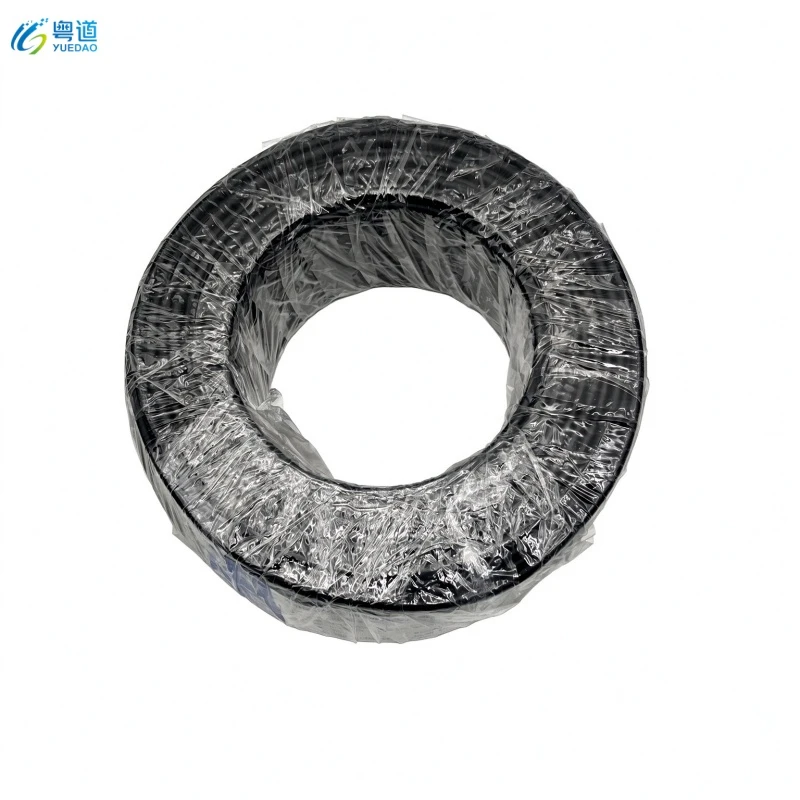
Industrial cables are the core arteries and neural networks of industrial systems, undertaking critical tasks such as power transmission, signal control, and data communication. Their performance directly affects the safety, efficiency, and stability of industrial production. Compared to cables used in civil or building applications, they must withstand harsher industrial environments, possessing higher mechanical strength, superior weather and corrosion resistance, stronger anti-interference capabilities, and special properties such as flame retardancy and fire resistance.
Copper core cables: High conductivity, large current carrying capacity, stable connection, and corrosion resistance make them the mainstream choice for industrial applications, especially suitable for critical equipment and demanding situations.
Aluminum core cables: Lightweight and low cost, but with poor conductivity, mechanical strength, and oxidation resistance, they are mostly used in cost-sensitive low-voltage power distribution or temporary power supply.